RRB Group D syllabus 2026: subject-wise topics, exam pattern and marks
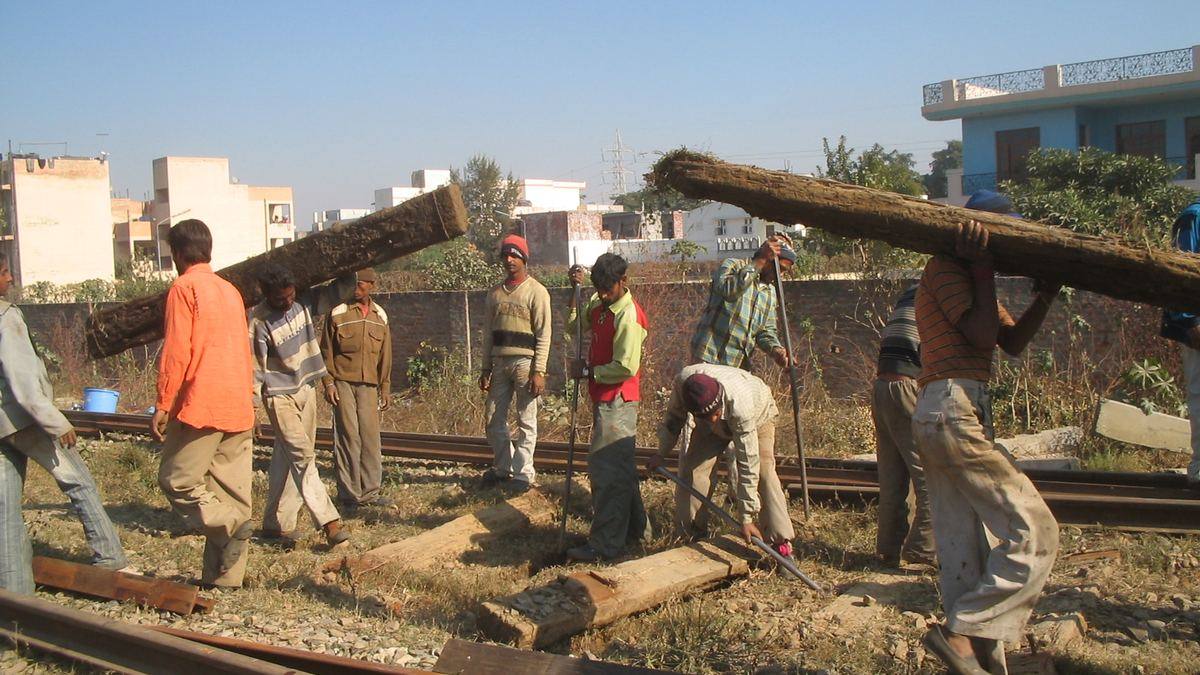
The RRB Group D (Level 1) exam is one computer-based test of 100 questions in 90 minutes, in four subjects: General Science 25, Mathematics 25, General Intelligence and Reasoning 30, and General Awareness and Current Affairs 20. Each question is 1 mark, and a wrong answer costs one-third of a mark. The same table appears in the last two notices, CEN 08/2024 and CEN 09/2025, and the syllabus below is from para 14 of CEN 08/2024, checked on 26 October 2026. The subject-wise numbers are indicative, so a shift can differ by a question or two.
RRB Group D exam pattern
| Subject | Questions (indicative) | Marks |
|---|---|---|
| General Science | 25 | 25 |
| Mathematics | 25 | 25 |
| General Intelligence and Reasoning | 30 | 30 |
| General Awareness and Current Affairs | 20 | 20 |
| Total | 100 | 100 |
- Time: 90 minutes on one clock (120 minutes for an eligible PwBD candidate with a scribe).
- Negative marking: one-third of a mark for each wrong answer.
- Languages: English, Hindi and 13 regional languages, each shown with English. If the two differ, the English wording prevails.
- Minimum marks to be shortlisted: 40% for UR and EWS, 30% for OBC (Non-Creamy Layer), SC and ST.
- Normalisation: marks are normalised when the test is held in more than one shift.
RRB Group D syllabus, subject by subject
General Science (25)
Physics, chemistry and life sciences of the Class 10 (CBSE) standard. This is the most predictable part of the paper: the questions come from the topics of Class 9 and 10 science textbooks, such as motion, force, work and energy, light, electricity, magnetism and sound; atoms, acids and bases, metals and non-metals, carbon compounds and the periodic table; and cells, life processes, human body systems, heredity, nutrition and diseases.
Mathematics (25)
| Area | Topics in the notice |
|---|---|
| Arithmetic basics | Number system, BODMAS, decimals, fractions, LCM and HCF, square root |
| Commercial maths | Ratio and proportion, percentages, profit and loss, simple and compound interest |
| Work and speed | Time and work, pipes and cisterns, time and distance |
| School maths | Algebra, geometry, trigonometry, mensuration, elementary statistics |
| Others | Age calculations, calendar and clock |
General Intelligence and Reasoning (30)
The largest subject. The notice lists analogies; classification; similarities and differences; alphabetical and number series; coding and decoding; jumbling; mathematical operations; relationships; directions; syllogism; conclusions and decision making; statement and arguments; analytical reasoning; Venn diagrams; and data interpretation and data sufficiency.
General Awareness and Current Affairs (20)
Current affairs in science and technology, sports, culture, personalities, economics and politics, and other subjects of importance. Read the last six to eight months of national news before your exam date, and keep a list of sports events, awards and government schemes.
After the CBT: the Physical Efficiency Test
Candidates are called for a qualifying PET at about three times the vacancies. In CEN 09/2025:
| Men | Women | |
|---|---|---|
| Carry a weight | 35 kg for 100 metres in 2 minutes | 20 kg for 100 metres in 2 minutes |
| Run | 1,000 metres in 4 minutes 15 seconds | 1,000 metres in 5 minutes 40 seconds |
The PET is qualifying only. Specified PwBD candidates, Course Completed Act Apprentices trained in Railway establishments and ex-servicemen are exempt. Start running training while you prepare for the CBT; the PET follows the result.
A study plan built on this syllabus
- Week 1: take one full RRB Group D mock test at 90 minutes before studying anything, to see where you stand.
- Weeks 2 to 6: Reasoning and Science first, since together they are 55 of the 100 marks. Two reasoning topic sets and one science chapter a day.
- Weeks 2 to 6, alongside: 30 minutes of Mathematics a day, topic by topic, by hand.
- Every day: 20 minutes of current affairs.
- The last four weeks: two full mocks a week, each followed by an analysis of the mock: which subject lost the most marks, and which wrong answers were guesses.
90 minutes for 100 questions is 54 seconds each. With one-third negative marking, a blind guess gains little or nothing on average; our article on negative marking works through the numbers.
Useful links
- RRB Group D 2026: exam date, how to apply and pattern
- RRB Group D syllabus page
- Free RRB Group D mock tests
- CEN 08/2024 notice (PDF, RRB Chandigarh)
- RRB official website
Frequently asked questions
What is the RRB Group D syllabus?
Four subjects: General Science (Class 10 physics, chemistry and life sciences), Mathematics, General Intelligence and Reasoning, and General Awareness and Current Affairs, in a 100-question CBT.
How many questions come from each subject in RRB Group D?
As the notice indicates: General Science 25, Mathematics 25, Reasoning 30, and General Awareness and Current Affairs 20. The numbers are indicative and can vary slightly.
Is there negative marking in RRB Group D?
Yes. A wrong answer loses one-third of a mark. A question left blank costs nothing.
What is the level of science in RRB Group D?
Class 10 (CBSE) physics, chemistry and life sciences.
Is the RRB Group D exam in Hindi?
Yes. The questions can be taken in Hindi, English or one of 13 regional languages, each shown alongside English.